
CASE /// EXPERIENCE · MOUNTAIN TEMPLE
Jade Tempel
Concept by RAVAROInvented example: the temple doesn't exist, the website does.
What if your guests had already walked the way to you before they set off? 1,284 steps, a hall of jade, a dragon after the storm — a website you climb.
The question at the start
What does a mountain temple actually sell? Not the roof and not the columns, but the way there: arriving at the bottom, climbing step by step, walking through a door and standing at the top.
Almost every website of a place leaves exactly that way out. It shows a hotel, a museum or a winery as a gallery, twelve beautiful photos in no particular order; the visitor flips through them, but he never walks through. We wanted to know whether a website can tell the way itself.
Why we built it
Nobody ordered the Jade Tempel, and that is on purpose. It belongs to a series of showcase pages with which we show what is possible: with no client behind it, so we have a free hand and can show our best instead of inventing client examples.
Whoever arrives here already knows RAVARO. The page does not have to convince him, it should interrupt him — with things nobody expects on a website.
And it should show what matters to us. AI now delivers images, films and 3D models in minutes; that is the tool. What a page tells, in which order and with which reward at the end, no tool decides. That judgement is the work, and it comes from marketing, not from technology.
“This is a completely different website from the usual.”
The one idea — and why
The way becomes the website: you climb it yourself, step by step, from the gate at the foot of the mountain to the roof.
Before a single image existed, the thread stood on one page: one hero, the visitor; one direction, upwards; one reward at the end — the hall, the dragon and the moment you realise where you have actually been. Only then did we decide which images, films and rooms carry that way.
We set the mood — colours, mist, the sequence of gate, stairs and hall — against reference images from an animated film that Ralph Appel, founder of RAVARO, brought along. We took the mood, not the buildings and no characters.
Without a thread you get clips that impress one by one and lead nowhere together — a row of three-second cuts instead of a story. And every fault in the thread that only shows up during the build is paid for with newly generated images and films. One sentence on paper is the cheapest part of the whole page, so it comes first.
What it became
View it liveOne continuous climb, built in five days from 2 to 6 October 2026: from the temple above the sea of mist down to the first step, up 1,284 steps, through the door into a jade hall you can walk into, and out onto the roof, where the dragon waits after a storm. Two frames from the real page — the dragon comes further down.
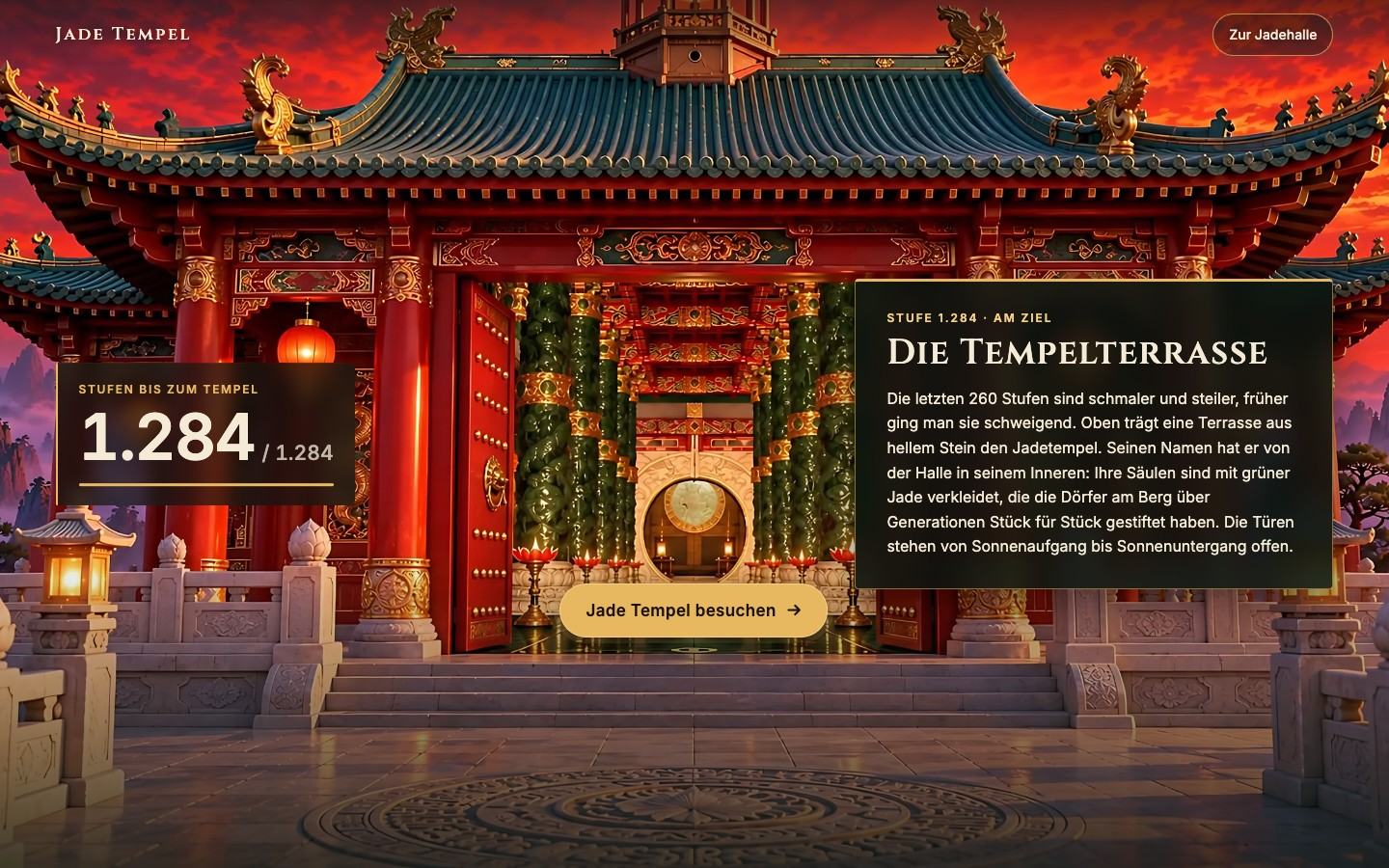
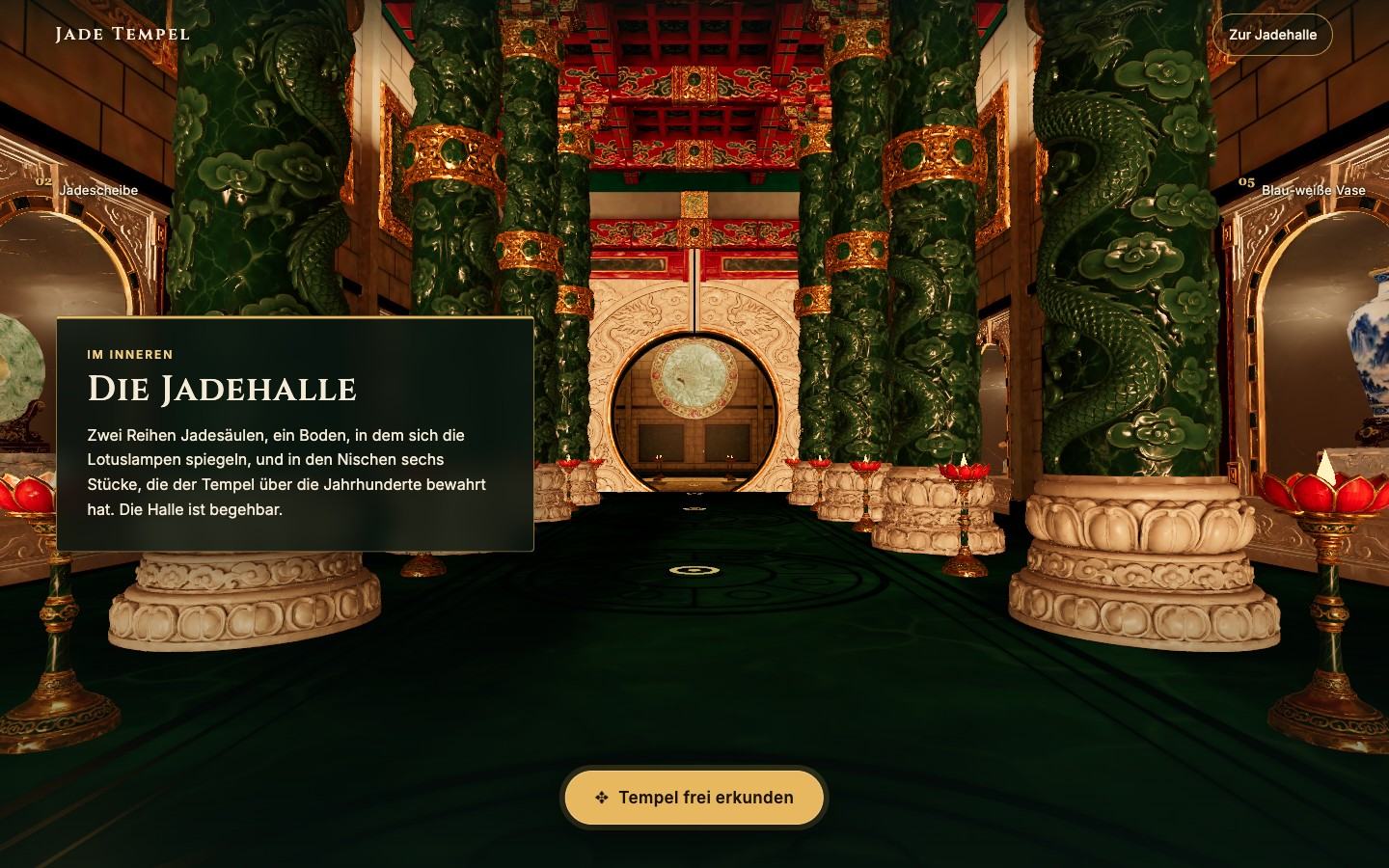
Screenshots of the page in version 0.8.2 of 6 October 2026, at 1440 pixels. Temple, stairs, festivals and the number of steps are invented — the page says so itself at the end.
How we work
With us, AI is a tool, not an argument. It delivers images, films and models in minutes — and just as quickly clips that rewind, models that come out flat and transitions that flicker. What turns them into a page that holds from the first frame to the roof are decisions.
The first one, the thread before the images, you have read above. Six more shaped this page. For each one, here is what we did, why exactly like that and what would have happened otherwise. Ralph went through every version himself, and his points appear in the steps where they changed something.
1 · The way starts at the very bottom
The first plan was a flight from the wide shot down to the gate. Looking at it, Ralph changed course: the way starts at the very first step, the gate lies much lower, 1,024 steps to the square and 260 more to the temple. Now the view dives from the opening screen into the sea of mist and comes out at the gate below.
Why like this: climbing is the story. A camera that first travels down tells the opposite, and the visitor feels it even if he cannot name it. As a side effect the mist saved a whole film run, because the change of place disappears behind it.
2 · One base image, three lights
At the start the light moves from day to evening to night. These are not three photos but three versions of the same picture, derived from one single base image.
Why like this: only then does every roof and every step stand in the same place in all three lights. Three separately generated images would have wobbled while blending — every stone would have wandered a little, and atmosphere would have turned into a fault.
Even so, the change flickered on screen at first. Measured, the cause was not the image but the browser repainting the stage tile by tile on every frame; after the fix it is 557 instead of 9,215 tiles over the same change, looking the same.
3 · For every stretch the technique that does it best
The page mixes four kinds of image: a layered still with moving light for the opening, three AI films for the climb, a real 3D hall you can walk into, and for the roof a still over which a storm passes.
Why like this: no technique can do everything. A film carries a camera flight, but you cannot enter it; a 3D room can be walked through, but it cannot render a mountainside above a sea of mist convincingly. One technique for everything would have made every stretch as good as the weakest.
The films were made with Seedance 2.0, 35 seconds in three runs. The first one rewound in its last three seconds or so to reach its end frame; we cut it at 12.25 seconds and ordered the other two with an explicit ban on moving backwards. The hall is built from Blender and 21 single pieces from Meshy; Ralph's verdict on the first version — “graphics like a game from 1995” — led to a quality test on a single column and then to the rebuild. Where the last film ends at the temple door and the 3D hall begins, the seam is measured so nobody notices the change.
4 · Throw out what doesn't carry: the dragon
For the dragon we built three ways and threw two of them out. First a 3D model from Meshy: from a side view it made a paper cut-out five centimetres deep, and a second attempt with several views gave a flat plate again. Above the roof this flat dragon looked, in Ralph's words, “like a video without a background”. Then a film in which it flies in — while scrolling it slipped past too fast.
Ralph's point led to the third way: a short storm of just over three seconds, and when the lightning fades the dragon is already sitting on the temple. Only on a click does it fly at the visitor.
Why like this: a climax you miss is no climax. The seated dragon waits until you look at it, and that takes no new film, only light and timing. Had we defended the first way because it was already built, a cardboard figure would be standing on the roof today.
5 · Checked in frame sequences, not on a single frame
Every version got contact sheets at 2560, 1440 and 390 pixels, in Chrome and in Safari's browser engine, with real scrolling. On top came measurements: the seams between the films, the contrast of the lettering against every light, the gaps between frames while scrolling.
Why like this: a screenshot shows no stalling and no flicker. Ralph noticed stalls on his run-through; a picture would have shown nothing, the measurement found the cause — not the films, but the first frame of the 3D hall. The longest stall at 1440 pixels fell from 966 to 217 milliseconds. Had we fixed it by feel, we would have shrunk the films and kept the stalling.
6 · The end turns to RAVARO
At the end there are no credits, but a hard cut into black: “Diesen Tempel gibt es nicht.” — this temple doesn't exist. Below it one sentence on what the visitor has just been through — no step, no hall, a website — and an orange button for a conversation.
Why like this: the moment you realise that all of it was a website is the strongest of the whole page. It turns wonder into a question: what could this do for me? A logo in the footer would have carried the same information and moved nobody. So that the cut lands, it sits inside the stage itself and stands there complete at once instead of wiping in from below.
Why it's strong
Picture yourself at the gate at the bottom. You scroll, and with every movement you climb a step higher, until the counter stands at 1,284 and the temple door opens in front of you. Inside the jade gleams, and you walk between the columns for as long as you like. Then you step out onto the roof, the sky darkens, a storm rolls in — and when the lightning fades, a dragon sits on the temple and looks at you.
That is the difference between a place you have looked at and a place you have been to. Nobody remembers twelve gallery photos in the evening; a climb, yes — because it took time, because you steered it yourself and because something was waiting at the end. That is why people stay, and why they tell others what they saw.
And that way does not belong to the temple. A hotel has its driveway and the door to the suite, a winery the walk down into the cellar, a monastery its cloister, a museum the room behind the room, a product the inside you want to open up. Whoever sells something like that sells a way — and can let the visitor walk it before he travels or orders.
The temple doesn't exist. Your place does.
Jade Tempel is invented: the temple, the gate, the 1,284 steps, the festivals on the square and the story of the hall. The page says so itself at its end.
The mood follows reference images from an animated film that Ralph brought along. Only our own images are shown here, not the references.
What you see is version 0.8.2. It was tested in Chrome and in Safari's browser engine at 2560, 1440 and 390 pixels; a check on a real iPhone is still to come. The page is heavy: films and hall load step by step, and according to the measurement of version 0.4, around 129 MB come together on a desktop by the time you reach the hall, around 77 MB on a phone.
It was built without a client. What it proves is the method, not a sales figure.
A website that only looks nice is dead weight. Website Systems builds a site from your actual business goals — one that takes work off your plate and turns visitors into real enquiries.
MORE CASES ///
Next build
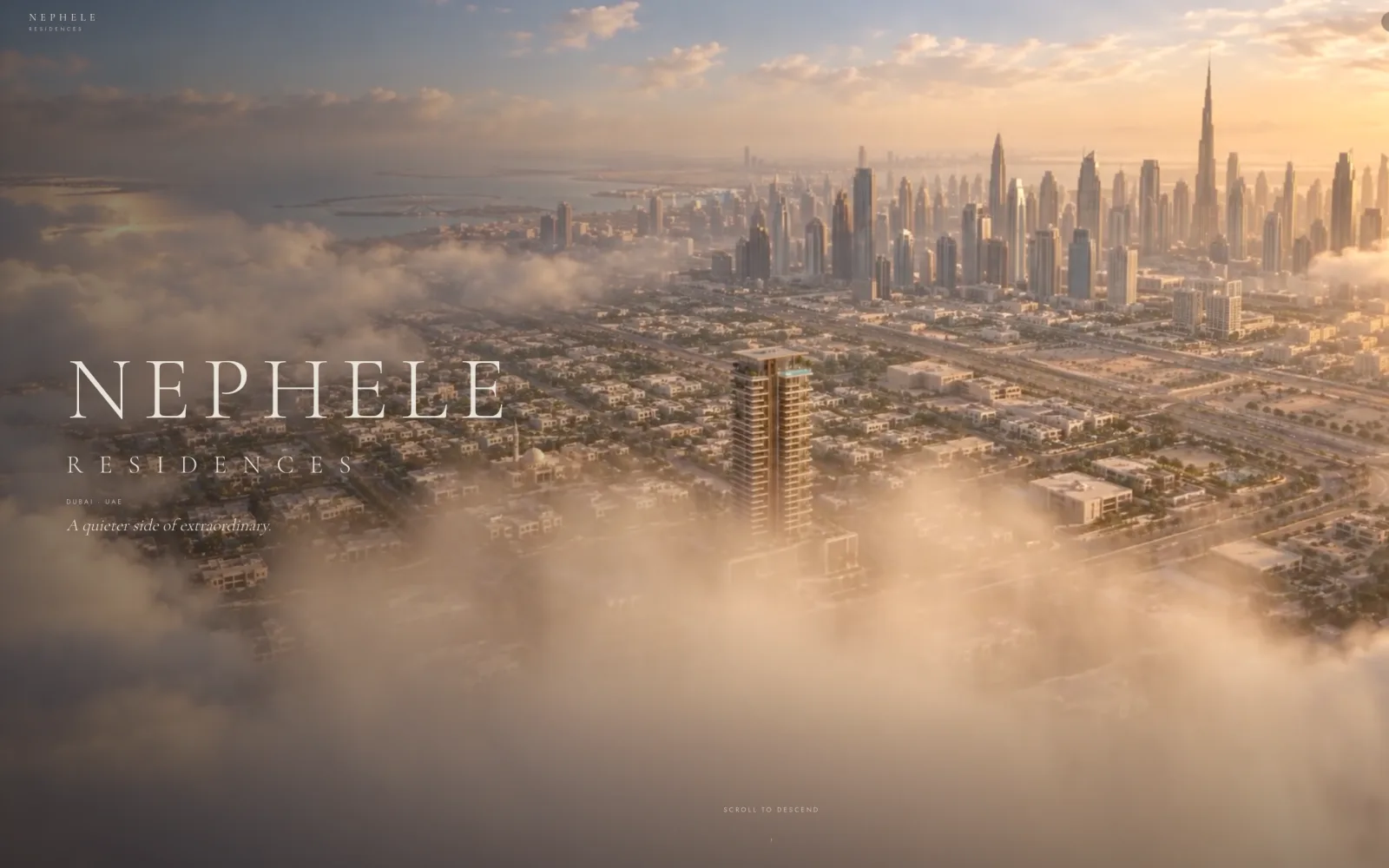
NEPHELE Residences
Nobody buys the development. They buy apartment A1803.

Leuchtfeuer Nordsee
Four days, ten versions, one lighthouse — and a lens you take apart yourself.
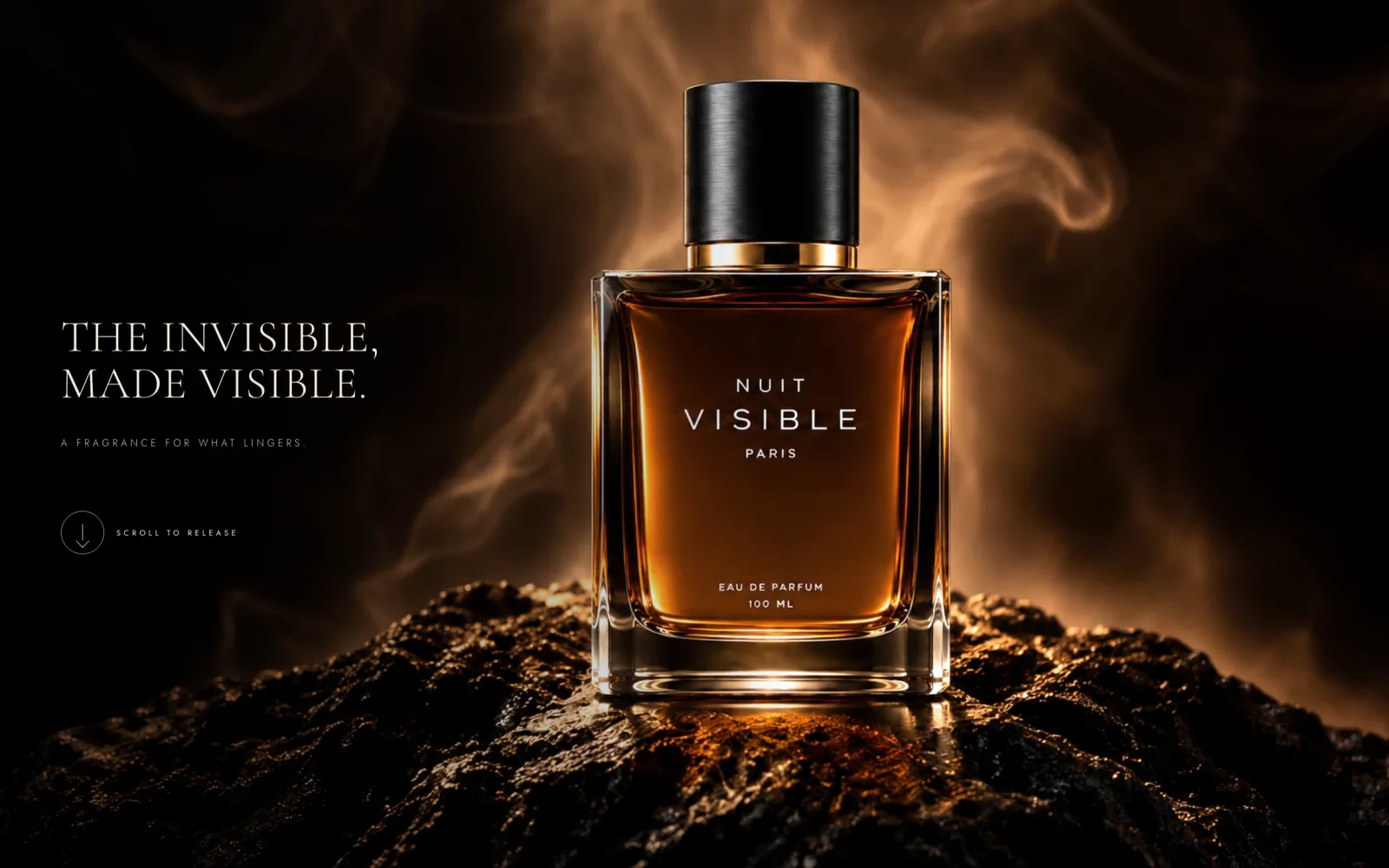
NUIT VISIBLE
A scent cannot be shown. So we let the scroll tell it.

The Elite Cars
A supercar dealer whose website already looked good — and still could not sell a car to someone who didn't feel like driving over.
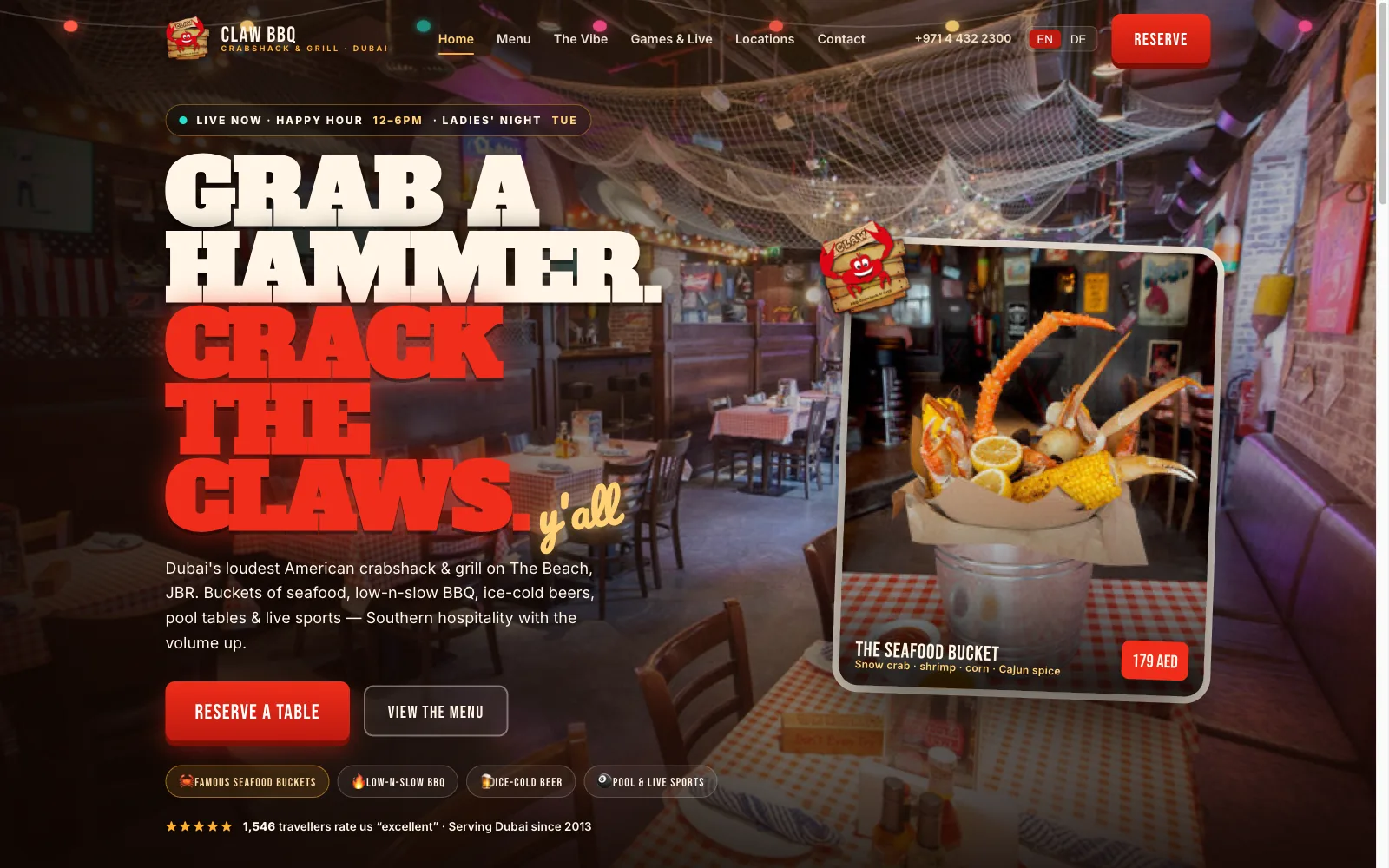
CLAW BBQ
I know this place. Their website did not.

Juwelier Dührkoop
Fine watches, sold from a page you could not lean into.

Andy Engel
A man people fly across continents for, with a website built for people driving past.
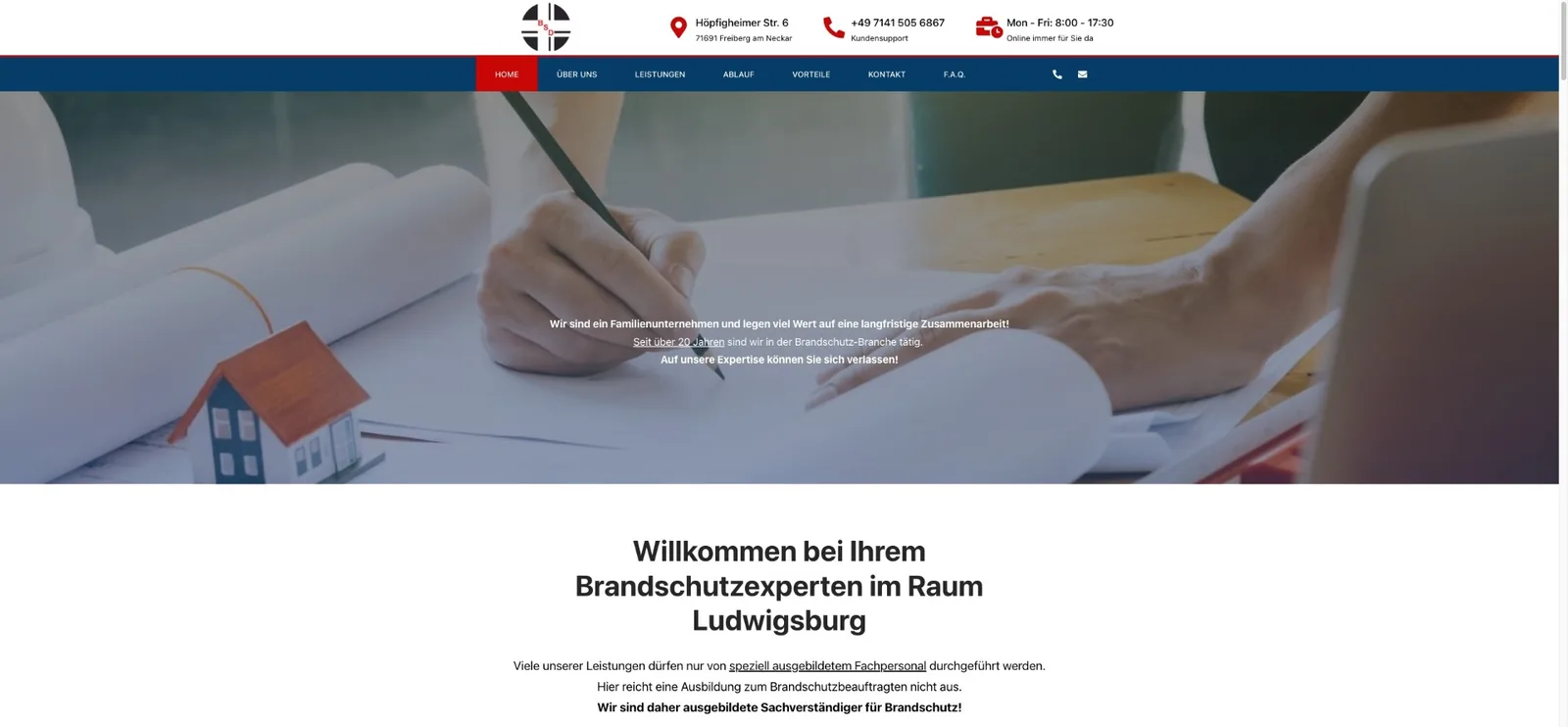
BSD Wiedemann
We stopped his website selling fire extinguishers, so the business could start selling expertise.

Hofmühl
A brewery does not sell beer on its website. It sells the reason someone reaches for that bottle in the shop.
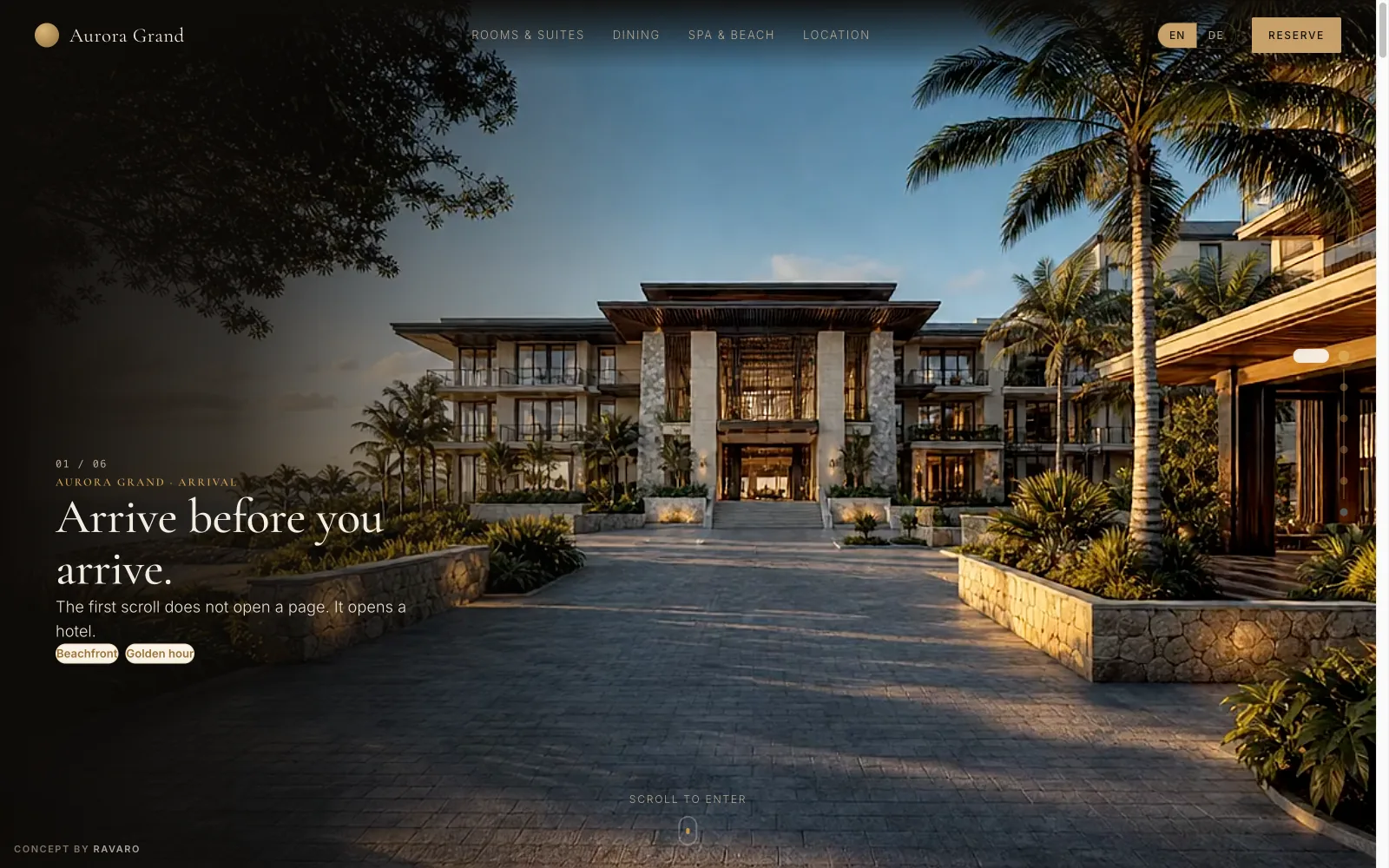
Aurora Grand
A hotel website you walk through before you book.
All our website work
Every project in this discipline — numbers, videos and results.